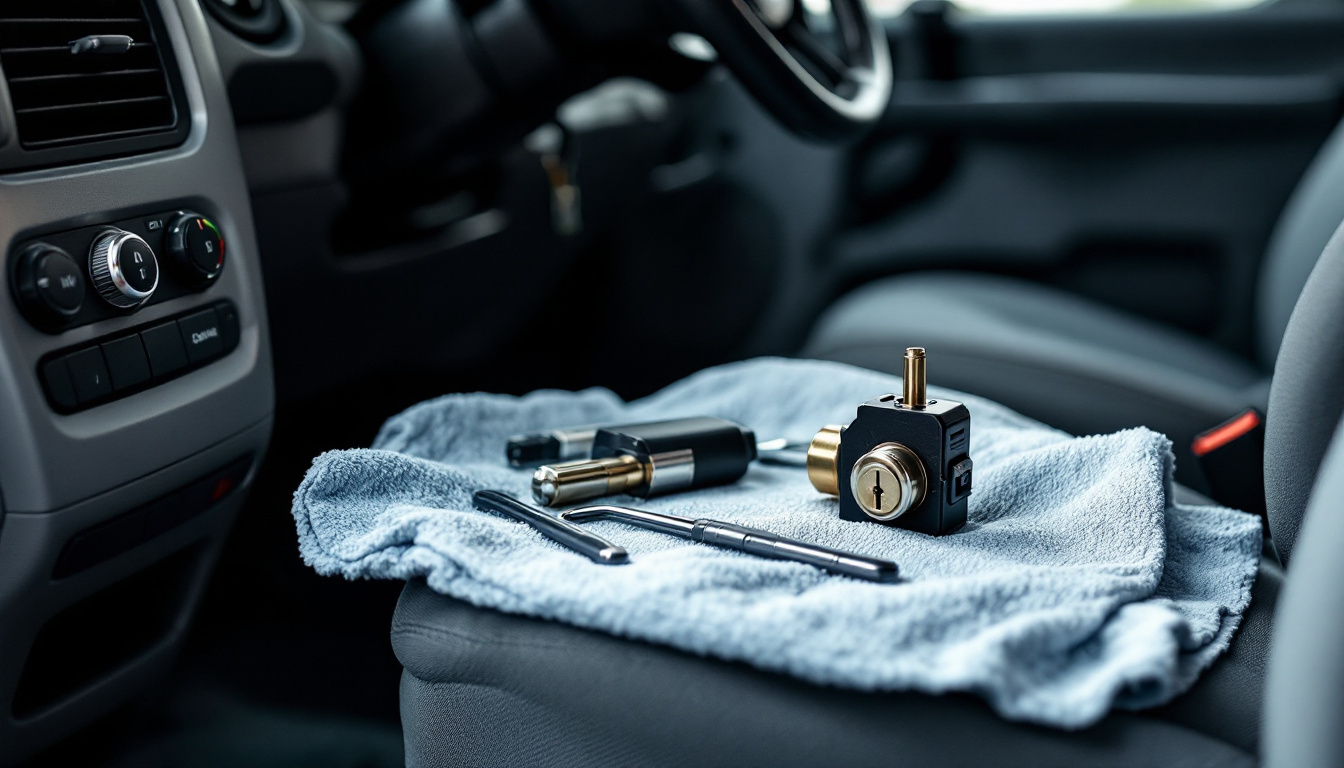
Chevrolet Express and GMC Savana Ignition Repair in Aledo TX
Work van key sticking or the ignition will not turn? What Express and Savana ignition repair costs in Aledo TX and how we get a van back to work the same day.
A work van with a bad ignition is not an inconvenience, it is lost revenue. The Express and Savana are among the highest-mileage, highest-cycle vehicles we touch in Parker County — a van that gets started fifteen times a day wears an ignition cylinder in a fraction of the time a commuter car does. Call or text (817) 634-5045 and Aledo Locksmith will repair it at your yard, your job site, or wherever the van stopped.
This guide covers what Express and Savana ignition repair costs in Aledo TX as of August 2026, how to tell a worn cylinder from a worn key from a failing switch, and how to keep a fleet van out of this situation in the first place.
Quick Answer: Cost and Timeline
As of August 2026, ignition repair on an Express or Savana in Aledo runs $180 to $420 and takes 45 to 90 minutes at the van, depending on whether the fault is the lock cylinder, the electrical switch behind it, or both.
If the cylinder is replaced, new keys are usually cut and programmed as part of the job. We keep that combined so you get one visit, not two.
Aledo Van Ignition Pricing
| Express / Savana Service | Typical Price Range |
|---|---|
| Diagnosis at the vehicle | $60–$120 |
| Ignition lock cylinder replacement | $180–$320 |
| Electrical ignition switch replacement | $170–$310 |
| Cylinder and switch together | $290–$480 |
| Keys cut and programmed to a new cylinder | $110–$220 |
| Key extraction, broken in the ignition | $90–$180 |
Ranges only — model year, engine access, and whether the van's security system needs a relearn all move the figure. Send the year and VIN for a real quote.
Three Different Failures That Look Identical
Owners describe all three the same way: "the key won't turn." They are separate faults with separate fixes and separate prices, and getting the diagnosis right is where the money is saved.
The lock cylinder is worn
This is the most common on high-cycle vans. Inside the cylinder are small spring-loaded wafers that read the key's cuts. Thousands of insertions round them off, and eventually the cylinder no longer aligns. Symptoms build gradually: you start having to jiggle the key, then wiggle the wheel, then find the one exact angle that works, then one morning nothing works at all.
The tell is that it got worse over months, not overnight.
The key itself is worn
An original key that has been in daily use for a decade has physically lost material off its cuts. It stops matching the cylinder it once matched perfectly. On a fleet van where drivers share one key, this happens fast.
The tell: a spare key that has been sitting in a drawer works noticeably better than the daily key. If that is true, the key is the problem and a freshly cut key to the vehicle's original code fixes it for a fraction of a cylinder job.
The electrical switch has failed
Behind the mechanical cylinder is an electrical switch that actually sends power to the starter, ignition, and accessories. When it fails, the key turns freely and normally — and nothing happens. Or the dash lights flicker, or the van dies at a bump in the road.
The tell: the key turns fine, but the electrical response is missing or intermittent.
Diagnosis Before Parts
We diagnose first because guessing wrong on a van costs real money. Replacing a perfectly good cylinder when the fault was a $15 worn key is the kind of mistake that gets discovered on the invoice, and we would rather not send that invoice.
The order we work in:
- Compare the daily key against a known-good or freshly cut key. If a new key to code resolves it, stop there.
- Check the mechanical action of the cylinder itself — feel for the wafer wear that a worn cylinder produces.
- Check the electrical behavior in each key position — accessory, run, and crank.
- Confirm the vehicle-side basics — battery, starter circuit, and immobilizer status — before condemning a component.
That sequence identifies which of the three faults you actually have, and it usually takes fifteen minutes.
Why Vans Wear Faster
If you run a service van out of Aledo or Weatherford, your ignition sees a duty cycle a passenger car never approaches:
- Cycle count. A plumbing or HVAC van started twelve to twenty times a day accumulates ignition cycles roughly ten times faster than a commuter vehicle.
- Key load. Heavy key rings hanging off the ignition put constant downward pressure on the cylinder. That side load is a genuine accelerant, and it is the easiest thing on this list to fix — split the vehicle key onto its own small ring.
- Shared keys. One key passed between drivers wears in a fraction of the time three keys would.
- Environment. Dust, grit, and job-site debris get carried into the cylinder on the key itself.
None of that is a defect. It is normal wear at an abnormal rate, and it is predictable enough to plan around.
Getting a Van Back to Work Fast
The reason we do this at your location is simple: a van that cannot start cannot be driven to a shop, and towing a full-size cargo van is expensive. We bring the cylinder stock, the key machine, and the programming equipment to the vehicle.
What that means practically:
- Yard or job site. We will work in either.
- Multiple vans at once. If a fleet has two or three showing the same early symptoms, we would rather handle them in one visit than three separate emergencies over the next month.
- Keys cut to the vehicle code, not copied from the worn key. Copying a worn key duplicates the wear, and the new key fails as fast as the old one.
That last point matters more than it sounds. A key cut from an original code is a correct key. A key copied from a ten-year-old daily driver is a copy of a worn key.
The Fleet Prevention List
Three things prevent most of the ignition calls we run on work vans:
- Take the vehicle key off the big ring. Weight on the cylinder is the leading avoidable cause of premature wear.
- Cut fresh keys from code every few years, before the daily key wears far enough to start damaging the cylinder. Cheap maintenance.
- Act on early symptoms. A key that needs a jiggle is telling you something. Handled early it is a key-cut. Ignored for six months it is a cylinder replacement plus a van that stranded a crew.
For the security-side of GM van keys, our GM PassLock, PassKey and VATS explainer covers what has to happen when the cylinder is replaced on a van whose keys carry a security element. If a key snapped off in your ignition, our post on broken car key extraction and replacement covers that specific recovery.
Where the Honest Limits Are
- We diagnose before we replace. If a $15 key resolves the fault, that is what we will tell you.
- A new cylinder does not fix a starter, a battery, or a fuel problem. If the van cranks but will not run, that is a different repair and we will say so.
- Proof of ownership is required on any key work — photo ID plus title, registration, or an insurance card with the VIN. For company vehicles, tell us the situation when you call.
- Some column work on certain model years needs more disassembly than others, which is why the range on this page is a range.
Mobile Van Service Across Parker County
Aledo Locksmith works on Express and Savana ignitions at your location across Aledo 76008, Willow Park, Annetta, Hudson Oaks, Walsh, Weatherford, and Fort Worth West. Same-day service is normal when the schedule allows, and we understand that a van down on a Tuesday morning is a different urgency than a car down on a Saturday.
If you run multiple vans, tell us — batching them into one visit is cheaper for you and easier for us to schedule.
Frequently Asked Questions
How much does Chevrolet Express ignition repair cost in Aledo?
As of August 2026, expect $180 to $320 for a lock cylinder, $170 to $310 for an electrical ignition switch, and $290 to $480 if both need replacing. Diagnosis runs $60 to $120 and is applied toward the repair.
My van key will not turn. Is the ignition bad?
Not necessarily. It could be a worn key, a worn cylinder, or a failed electrical switch. Test this first: if a spare key that has been sitting in a drawer works better than your daily key, the key is worn and a freshly cut key fixes it far cheaper than a cylinder.
Can you repair the ignition at my job site?
Yes. Everything travels in the van — cylinder stock, key machine, and programming equipment. Towing a full-size cargo van is expensive and entirely avoidable for this repair.
Will I need new keys after the ignition is replaced?
Usually yes. A new lock cylinder has its own key cuts, so keys are cut and programmed as part of the job. We do that in the same visit rather than sending you somewhere else afterward.
Why do work van ignitions fail so much faster?
Duty cycle. A service van started fifteen to twenty times a day accumulates ignition wear roughly ten times faster than a commuter car, and heavy key rings hanging off the cylinder accelerate it further. Splitting the vehicle key onto its own small ring is the single best prevention.
How long is the van out of service?
Typically 45 to 90 minutes at the vehicle for the repair itself, including cutting and programming keys. We schedule fleet work in the order that keeps the most vans working.
Express or Savana Ignition Down in Parker County?
We diagnose, repair, and cut new keys at your yard or job site — most vans back in service inside 90 minutes.
Call or text (817) 634-5045 with your year and VIN.
This article was written by the Aledolocksmith Automotive Locksmith Team.