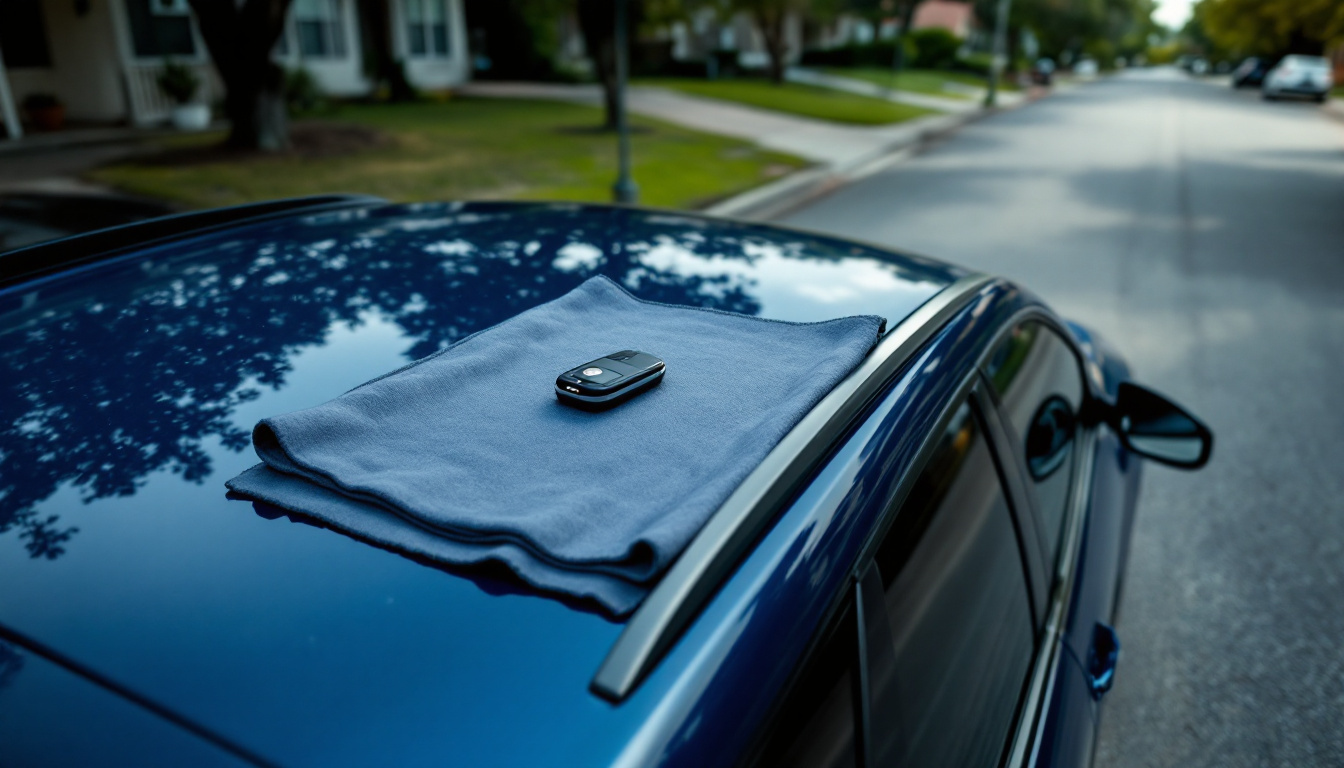
Hyundai Santa Fe & Tucson Key Fob Replacement in Aledo TX
Car key replacement for the Hyundai Santa Fe and Tucson in Aledo TX. What a new fob costs, how Hyundai immobilizer programming works, and what a mobile locksmith can do on site.
Car key replacement in Aledo TX for a Hyundai Santa Fe or Tucson is a mobile job — we cut and program the key or fob where your vehicle is parked, and for most model years there is no reason to involve a dealership at all. Call or text (817) 634-5045 with your VIN and we will quote it first.
Hyundai has moved fast on key technology over the past fifteen years, which means two Santa Fes a few model years apart can need genuinely different work. This guide covers what replacement costs here, how the immobilizer decides whether to authorize a start, and the specific things we see go wrong on these two.
Quick Answer
With a working key present, a replacement fob is registered alongside it in a short visit at a moderate price. With every key gone, it becomes an all-keys-lost job — the key code comes from the VIN, a blade is cut from scratch, and programming happens without a trusted key present, which takes longer and costs roughly double. Both are done at the vehicle.
Aledo Hyundai Key Replacement Pricing
Typical local ranges as of August 2026:
| Hyundai Key Service | Typical Price Range |
|---|---|
| Spare transponder key (older Tucson) | From $115 |
| Spare remote head or flip key | $150–$300 |
| Spare smart key fob (push-button) | $230–$450 |
| All keys lost — bladed key | $250–$450 |
| All keys lost — smart key | $340–$620 |
| Emergency blade cut only | $65–$135 |
| Second key programmed at the same visit | Usually $70–$150 less |
Model year drives this more than almost anything else on a Hyundai. Send the VIN and we will confirm the exact key type and a firm number rather than a guess.
How Hyundai Authorizes a Start
Hyundai's immobilizer follows the familiar pattern with a useful failure signature. Turn the key or press the button and an antenna energizes the transponder in your key. The key answers with a coded response. The immobilizer compares it against the keys in memory and either authorizes fuel and spark or does not. When it does not, the engine cranks and dies within a second or two, typically with a small key or lock symbol appearing on the cluster.
That crank-and-die is diagnostic gold. It tells you the battery, starter and engine are all healthy and the security system is refusing. A Santa Fe that will not crank at all has a different problem and it is not a key problem.
Transponder and flip key generations
Earlier Tucson and Santa Fe trims use a cut blade with the chip in the head or in a flip housing with integrated remote buttons. Two pairings happen — the immobilizer learns the chip so the engine runs, and the body module learns the lock and unlock functions so the doors respond. A key that opens the doors but crank-and-dies has had exactly half the job completed.
Smart key generations
Current trims use a proximity fob with push-button start and an encrypted rolling challenge, so the fob is registered into key memory rather than copied. There is no such thing as cloning a smart key, which is exactly the point.
Inside the fob is an emergency blade most owners have never removed. It opens the driver's door when the fob battery dies. We check it as part of the visit and can cut one to the factory code if yours is missing or was never cut properly.
Our broader Hyundai key replacement and anti-theft guide covers the make in more depth, and the Hyundai and Kia SMARTRA immobilizer module writeup covers the module side when a key alone is not the fault.
Common Santa Fe and Tucson Problems We See
One key on a used purchase
Extremely common. These sell well as used family vehicles and they change hands with a single key surprisingly often, because the previous owner lost the second one years earlier and never replaced it. If you bought yours pre-owned and only got one key, you are one bad afternoon away from an all-keys-lost call.
The fob that got washed
Both nameplates are family vehicles, which means fobs go through laundry with real regularity. A washed fob sometimes dries out and works and sometimes does not. Intermittent behavior afterward is a warning shot, not a quirk to live with.
Range dropping off
You used to unlock walking up and now you have to be at the door. Coin cell on its way out. A few dollars now versus a call-out later.
A weak 12-volt battery imitating a key fault
Very common on modern Hyundais and worth checking before anything else. A marginal battery produces symptoms that look precisely like a dead fob — no response, the start button ignoring you, warnings for systems that are fine. Rule out the battery first; it is the cheapest possible answer.
Push-button trims and the backup start procedure
Most keyless Hyundais have a documented backup where you hold the fob directly against the start button so a short-range antenna can read it. If that is now the only way your vehicle starts, you have found a dead fob battery — and you have also found the reason it is worth knowing that procedure before you need it.
Aftermarket fobs bought online
Some program without trouble. Many are the wrong FCC ID, the wrong frequency, or carry a chip that will not accept the protocol. If you already own one, bring it and we will try it — but the programming time is charged whether it cooperates or not, which often erases the saving entirely.
All Keys Lost vs. Adding a Key
With one working key, the visit is short: confirm the correct key against the VIN, cut a fresh blade to the factory code, register the new key alongside the existing one, and test crank, run and every remote function. Your current key is untouched.
With every key gone, we build from the VIN — retrieving the factory key code through the proper channel, cutting a blade from scratch, and programming with nothing the vehicle already trusts. Some Hyundai platforms enforce a timed security wait during that process. It cannot be shortened, and the wait is the anti-theft design working correctly rather than a delay anyone chose.
We verify ownership before any all-keys-lost work: registration, title or an insurance card in your name plus a matching photo ID. Building a key from nothing but a VIN is exactly the capability a thief would want, and checking is the line every legitimate shop holds.
An Honest Boundary
Most Santa Fe and Tucson years are routine mobile work. The caveat is the newest end of the lineup, where Hyundai has continued tightening key security and a small number of very current trims need procedures that are not universally supported yet. We would rather establish that from your VIN over the phone than have a technician find out in your driveway. Send it and a technician confirms your exact setup before anyone commits to the trip.
How We Work in Aledo
We come to the vehicle. A car with no keys cannot be driven anywhere, and a car that runs fine should not be towed just to have a key made. We cover Aledo and 76008, Willow Park, Annetta, Hudson Oaks, Walsh, Weatherford and the west side of Fort Worth.
Have the VIN ready when you call — base of the windshield, driver's door jamb, or your insurance card — along with the model year. Those two details are what turn a vague estimate into an accurate price and a realistic arrival window on the first call.
Frequently Asked Questions
How much is car key replacement in Aledo TX for a Hyundai Santa Fe? As of August 2026, a spare transponder key starts around $115, a remote head or flip key runs $150 to $300, and a smart key fob $230 to $450. If every key is lost, expect $250 to $450 for a bladed key and $340 to $620 for a smart key. A second key at the same visit is typically $70 to $150 cheaper.
Do I need a Hyundai dealership? For the large majority of Santa Fe and Tucson years, no. A mobile automotive locksmith cuts and programs the same keys, comes to your vehicle, and generally does it for less. A handful of the very newest platforms are the honest exception, which is why we ask for the VIN before quoting.
My Hyundai cranks but will not start and a key symbol is showing. Is it the key? Almost certainly. A crank that dies within a second or two with a key or lock symbol lit is the immobilizer refusing to authorize the engine. The mechanical side is fine. A vehicle that will not crank at all has a different problem.
Can you make a Hyundai key with no working key at all? Yes. We retrieve the factory key code tied to your VIN, cut a blade from scratch, and program it into the immobilizer without a trusted key present. Proof of ownership is required before we begin.
Will a new fob stop my old one from working? No. Adding a key leaves existing keys in memory untouched. Erasing a lost or stolen key so it can never start the vehicle is a separate procedure, and it requires every key you intend to keep to be present at the same time.
How long does it take? Usually under an hour when a working key exists. All-keys-lost jobs run one to two hours because of the security access step, and on some platforms a chunk of that is an enforced wait the vehicle imposes.
We Bring the Key to You
Whether you want a spare made before it matters or you are standing beside a Tucson with nothing to start it, it is the same visit and the same number. Call or text (817) 634-5045 with your VIN and we will come out to Aledo, Willow Park, Annetta, Hudson Oaks, Walsh, Weatherford or west Fort Worth.
Written by the Aledolocksmith Automotive Locksmith Team — mobile automotive key and module service across Aledo and Parker County.